


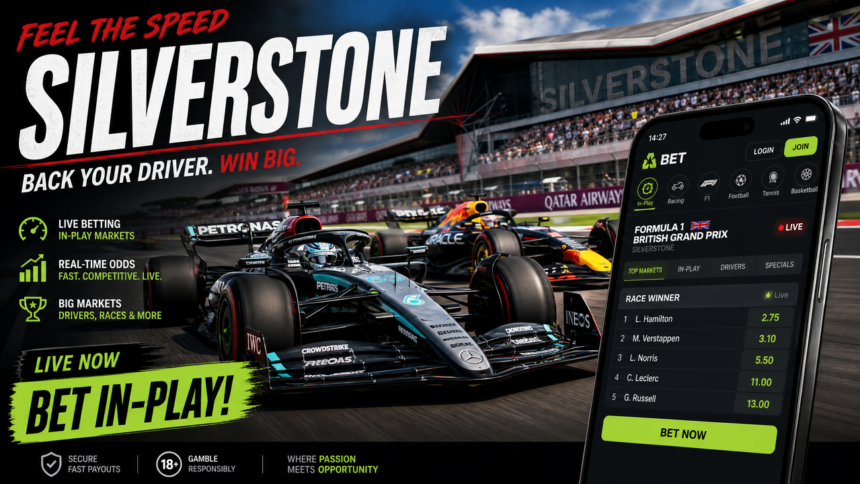
British Grand Prix Triggers Betting Surge
The 2026 British Grand Prix has ignited a sharp rise in wagering activity across the UK and internationally. Bookmakers reported a record-breaking uptick in turnover as fans poured money into the homegrown F1 title fight, pushing markets to new levels of liquidity and volatility.
Why this race mattered to punters and operators
Several factors converged to create the surge. A closely fought championship, with a British driver and a major team in contention, turned Silverstone into more than a sporting spectacle. It became a live betting event — where in-play and mobile wagers dominate — and a marketing moment for operators.
That mix of local passion, headline drama, and accessible betting products drove spikes across markets. Fans weren’t just betting on the race winner. They were backing podium finishes, head-to-head matchups, fastest laps, and a growing slate of micro-markets offered by exchanges and retail sportsbooks.
Record turnover, but what does it mean?
Operators described the weekend as ‘record turnover’ — industry shorthand for the total amount wagered. Turnover is an important headline, but it does not equal profit. For bookmakers, the key metrics are **gross gaming revenue (GGR)** and exposure. Heavy volume can boost GGR, however, volatile outcomes, late market moves, and concentrated liability on hot favourites can compress margins.
High-profile events like this push sportsbooks to tighten odds quicker, limit stakes on certain markets, and, in some cases, seek layoff bets with exchanges or other firms to manage risk. For exchange platforms, higher matched volume generally means healthier commission receipts and deeper order books.
Market mechanics and platform stress
The weekend tested trading operations and tech stacks. Operators reported peak concurrency on mobile apps and a surge in live markets. That required robust trading teams and scalable backend infrastructure to price markets in milliseconds, while handling authentication and payment throughput.
Data providers and telemetry feeds also proved critical. With live timing and sector splits dictating odds movement during the race, delays of even a second can create liability. Firms with proprietary data and low-latency feeds gained an edge, and those relying on syndicated feeds faced pricing risk.
Marketing, customer behaviour and lifetime value
For operators, the Grand Prix was a customer-acquisition and reactivation bonanza. Acquisition costs spiked, but so did new account registrations and first-time deposits from younger, engaged F1 fans. Upsell to casino and in-play products became the commercial focus post-race — typical behaviour for event-driven signups.
Retention will depend on product quality and fair pricing. If operators convert short-term mania into engaged, long-term customers, the weekend’s value multiplies. If it remains a one-off spike, the commercial benefit is fleeting.
Regulatory and responsible-gambling implications
The surge also puts a spotlight on regulation and harm prevention. In the UK, the Gambling Commission monitors spikes in activity, particularly where aggressive marketing meets a rise in impulsive, in-play betting. Operators must balance commercial opportunity with enhanced monitoring for risky behaviour, deposit limits, and timely interventions.
Regulators and treatment groups have previously flagged major sporting events as periods of increased harm. The industry’s response, including targeted affordability checks and clearer messaging about responsible play, will shape public and political perception.
Outlook for the season
The British Grand Prix has already reshaped betting markets for the remainder of the 2026 season. Bookmakers will adjust future markets, hedging strategies, and product mixes to account for heightened interest in F1. For the wider industry, the weekend reinforced a simple truth — major sporting narratives drive wagering, but the commercial prize accrues to firms that combine agile risk management, deep liquidity, and responsible-play safeguards.
That mix will determine whether this was a historic one-off, or the start of a larger F1-driven revenue stream for bookmakers and exchanges alike.