

FanDuel’s Love Island Games Reshape Branded Content
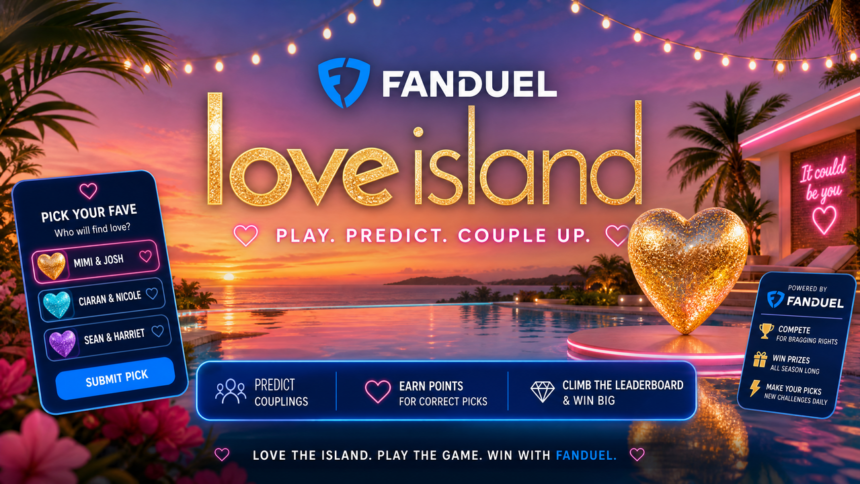
This week, **FanDuel** launched a wave of **Love Island**-themed games, and the response has been immediate. Players are flocking to the new experiences. Social feeds are filling with clips, and engagement metrics are rising. The fusion of reality TV branding with **interactive gaming** mechanics is not just a novelty, it’s a strategic play with clear commercial and market implications.
Why the collaboration matters
Branded partnerships have been part of the iGaming playbook for years, but this move signals a shift. FanDuel is marrying mainstream entertainment with sportsbook and casino mechanics. That blend expands reach. It attracts casual viewers who know the show, and it pulls in seasoned bettors who seek new formats.
In practical terms, the partnership leverages a recognisable IP to reduce acquisition costs. Familiarity with **Love Island** lowers the psychological barrier for first-time players. It also creates cross-promotional opportunities across TV, streaming, and social. For an operator, that means immediate brand recall, faster onboarding, and a richer pool of conversion data.
How the mechanics work
The games mix prediction markets, skill-based mini-games, and social features. Players can wager on outcomes, compete in timed challenges, and share results with friends. The interface is mobile-first, with short session lengths designed for snackable play. That aligns with modern attention spans, and it fits social distribution models.
From a product perspective, these mechanics are smart. They increase session frequency and boost time-on-platform, while keeping monetary friction low. Paid features and in-game purchases create layered **revenue streams**, and branded rewards help maintain relevance beyond the show’s broadcast cycle.
Market implications and competitive pressure
FanDuel’s move will pressure rivals to pursue similar deals, or to double down on native IP. Expect other major operators to chase streaming-era partnerships, and to refine social-first formats. The upside is clear: branded games can drive rapid growth in new demographics, particularly younger players who value entertainment over traditional wagering.
However, this is not risk-free. Regulatory scrutiny often follows branded betting products, especially when a major entertainment property is involved. Operators must navigate advertising rules, player protection requirements, and jurisdictional differences in what constitutes skill versus chance. Compliance will be a deciding factor for how widely these formats can scale.
Data and monetisation — what to watch
Two metrics will define success: retention and monetisation per user. Branded games can generate strong initial signups, but the challenge is to convert trial players into long-term customers. FanDuel can capitalise on first-party data to personalise offers, optimise in-game economics, and refine matchmaking in social contests.
Monetisation will likely combine traditional wagering with sponsorship, merchandising, and premium passes. Operators that treat branded games as marketing funnels, rather than standalone products, will see the most long-term value. Cross-sell opportunities into sports betting and casino verticals are particularly lucrative.
Broader trends and what’s next
This launch sits at the intersection of three trends: convergence of media and gaming, the rise of social betting, and the growth of experiential marketing in iGaming. If FanDuel’s experiment proves durable, we could see a wave of collaborations between streaming shows and operators, a proliferation of short-form wagering products, and heightened investment in social features.
For regulators and public-interest groups, the priority will be ensuring transparency and protecting vulnerable players. For operators, the challenge is balancing engagement with responsible design. For the industry, the opportunity is to reach wider, more diverse audiences, while building sustainable, multi-channel revenue models.
FanDuel’s **Love Island** games are more than a promotional stunt. They are a test case for the next generation of branded **iGaming** content, and the results will shape how operators, publishers, and IP holders collaborate in the months ahead.