

New Zealand is preparing to legalize online casino gambling under a tightly controlled regulatory framework, marking one of the most significant gambling policy changes in the country in years.
The government has outlined plans for a regulated market that would allow up to 15 licensed online casino operators, replacing the current situation where most online gambling occurs through offshore websites. The proposed system is designed to bring the sector under stronger oversight while limiting potential harm to players.
The reform is being developed under the supervision of the New Zealand Department of Internal Affairs, which currently oversees gambling regulation in the country.
If implemented as planned, the full regulatory regime will come into force on December 1, 2026, with additional enforcement powers targeting illegal gambling advertising expected to begin on May 1, 2027.
A Controlled Online Casino Market
Unlike some jurisdictions that allow dozens of competing operators, New Zealand intends to keep the market deliberately limited.
Under the proposed framework, the government would issue a maximum of 15 online casino licenses, creating a tightly managed market where operators must meet strict regulatory requirements before offering services to players.

The goal is to channel players toward licensed platforms while maintaining a high level of oversight.
Officials have acknowledged that many New Zealanders already gamble online through offshore operators, which operate outside domestic regulations and consumer protections.
Legalization aims to bring that activity into a regulated environment where player safety rules and enforcement mechanisms can be applied.
Major Advertising Restrictions
One of the most notable elements of the proposal is its approach to marketing.
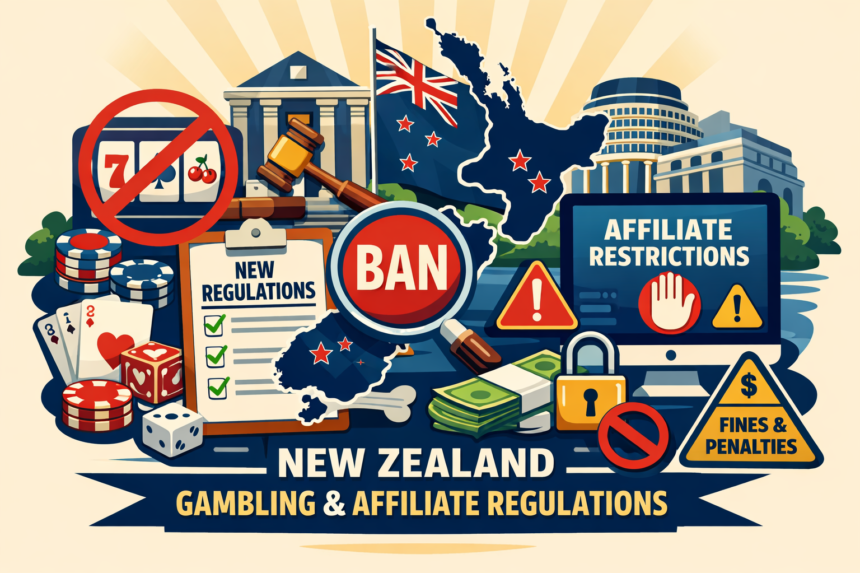
The framework would ban affiliate marketing and influencer promotions for online casinos, a move designed to limit aggressive digital advertising practices often seen in other markets.
Affiliate marketing—where websites or content creators earn commissions by directing players to gambling platforms—has become a major acquisition channel for online casinos globally. New Zealand’s proposal would effectively eliminate that model within the regulated market.
Influencer endorsements would also be prohibited, preventing social media personalities from promoting gambling platforms to their audiences.
Credit Gambling and Gameplay Limits
The proposed rules also introduce stricter controls on player behavior.
Under the framework, credit gambling would be banned, meaning players would not be able to gamble using borrowed funds or credit-based payment methods.
Another unusual restriction would limit players to one online slot game at a time, preventing users from running multiple games simultaneously across different browser windows or devices.
Regulators say such measures are intended to reduce impulsive or high-risk gambling behavior.
Crackdown on Illegal Operators
Alongside legalization, the government plans to strengthen enforcement against unlicensed gambling operators and illegal advertising.
Authorities will receive expanded powers to investigate and penalize platforms that target New Zealand players without a license.
The enhanced enforcement regime, including stronger advertising controls, is scheduled to take effect on May 1, 2027, several months after the regulated market launches.
Officials hope the combination of legal options and stricter enforcement will reduce the influence of offshore operators that currently dominate the online casino space.
A Major Shift in Gambling Policy
For New Zealand, the move represents a significant change in how online gambling is handled.
At present, online casino gambling by domestic operators is largely prohibited, while offshore platforms remain accessible to players.
The proposed licensing system would effectively create a fully regulated online casino market for the first time, bringing New Zealand closer to regulatory models used in countries such as the United Kingdom and several European jurisdictions.
However, the government’s approach is noticeably more restrictive, with limits on operator numbers, marketing activity, and gameplay behavior.
Conclusion
New Zealand’s planned online casino regulation marks a clear shift from prohibition toward controlled legalization.
By allowing a limited number of licensed operators while introducing strict advertising rules and player safeguards, the government hopes to strike a balance between consumer protection and market oversight.
If the proposal proceeds as planned, the country’s first fully regulated online casino market will launch on December 1, 2026, a development that could reshape the gambling landscape across the South Pacific.
For operators and players alike, the message is clear: online casinos are coming to New Zealand, but under some of the strictest rules in the industry.