

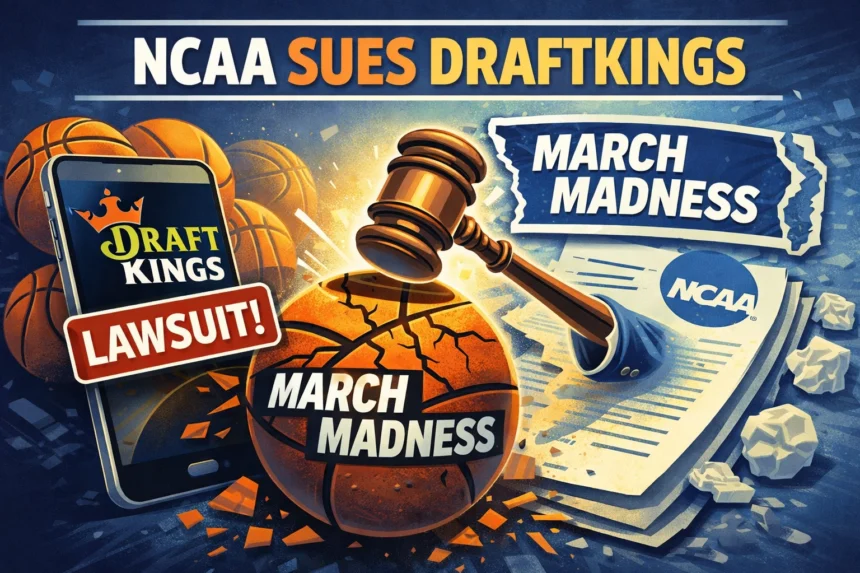
The NCAA has taken legal action against DraftKings over the use of “March Madness” and other well-known tournament terms in sports betting promotions. At the center of the dispute is a simple but important claim: the NCAA says this kind of branding can make people think there is an official connection between the tournament and the sportsbook when there is not.
Why the case matters
This is not just a fight over words. For the NCAA, March Madness is one of the most valuable brands in college sports. The organization argues that when those names appear in gambling ads and sportsbook offers, it can blur the line between the tournament itself and betting companies trying to profit from the event.
The lawsuit reportedly covers several famous tournament phrases, including Final Four, Elite Eight, and Sweet Sixteen. According to the complaint, using those terms in gambling marketing may mislead fans and create the impression of endorsement, sponsorship, or partnership.
DraftKings pushes back
DraftKings is not backing down. The company’s position is that it is using these terms in a descriptive way to identify the games people are betting on, not as its own brand. In other words, DraftKings says it is referring to the tournament by the name people already know, and that this should be allowed.
That response sets up the main legal question in the case: when does a familiar sports reference become trademark misuse, especially when it is being used to sell or promote gambling products? It is the kind of issue that could matter far beyond one operator or one tournament.
Bigger than one lawsuit
The case also lands at a time when the relationship between college sports and sports betting is under heavier scrutiny. Betting is now a much bigger part of the sports landscape than it was a few years ago, and that has created fresh concerns around player welfare, game integrity, and how betting companies market themselves around young audiences.

For gambling brands, the message is pretty clear: using famous sports language may look smart from a marketing angle, but it can quickly become a legal risk if the rights holder believes the public could be confused. For fans, it is another reminder of how tightly sports, media, and betting have become connected.
Conclusion:
The NCAA’s lawsuit against DraftKings is about more than just March Madness wording. It is about who gets to control one of the biggest brands in American sports, and whether betting promotions can use that language without making it seem like the tournament is part of the deal.