


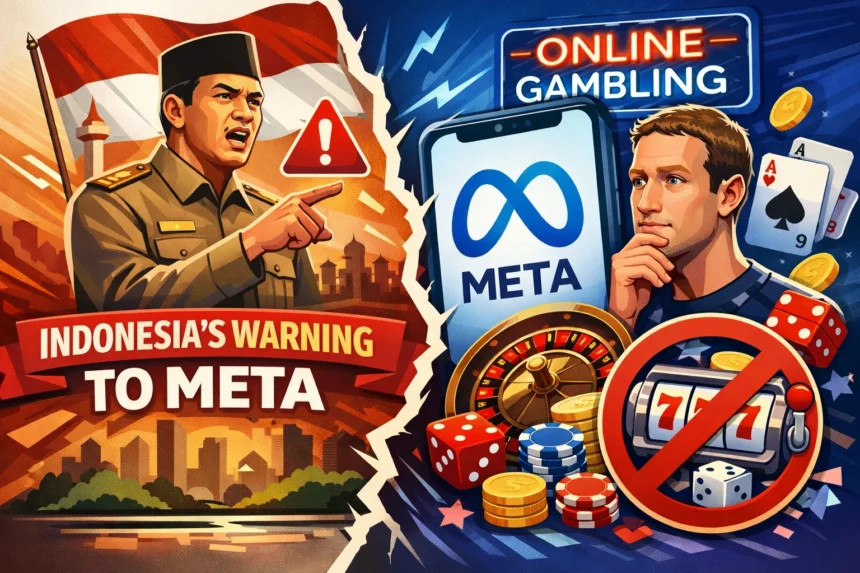
Indonesia has added a new twist to the fight against illegal gambling by warning Meta over online gambling and disinformation circulating across its platforms. The significance is not just the warning itself. It is what the warning reveals about enforcement priorities: regulators are no longer focusing only on bookmakers and gambling operators, but also on the digital channels that help gambling content reach the public.
That matters because it widens the compliance perimeter in a meaningful way. In practical terms, Indonesia is saying that online gambling does not become someone else’s problem simply because it appears as platform content rather than as a direct operator website. If gambling marketing, referral links, or related content continue to circulate through major social and messaging platforms, those platforms may now face more direct regulatory pressure.
Indonesia Is Targeting Distribution, Not Just Operators
The warning reportedly followed concerns from Indonesia’s communications ministry that Meta had not done enough to remove flagged content linked to online gambling and disinformation. Officials said the company’s compliance level was too low and described the government’s message as a stern warning rather than a casual reminder. That makes this more than a symbolic complaint. It reflects a broader enforcement view in which digital intermediaries are expected to play a more active role in preventing illegal gambling content from spreading.
This is important in gambling policy terms because illegal gambling ecosystems rarely depend on one thing alone. They rely on websites, payment routes, affiliates, messaging channels, and platform visibility. Once regulators begin focusing on distribution infrastructure, the industry argument shifts. The question stops being only “who is offering the gambling?” and becomes “who is helping it circulate?” That is a much broader and more uncomfortable question for tech platforms.
Indonesia has already shown it is willing to take a harder line on harmful online content more generally, including new restrictions affecting younger users on social media platforms. That wider policy environment helps explain why gambling-related platform content is now receiving closer scrutiny as part of a broader digital-safety push.
Why the Meta Warning Matters for the Wider Gambling Industry
For the gambling sector, the bigger takeaway is that enforcement is becoming more layered. Regulators are not just chasing illegal operators after the fact; they are increasingly looking at the systems that distribute, amplify, or normalize gambling content before users ever reach an operator. That can include social platforms, messaging services, ad networks, and other digital channels that make illegal gambling easier to discover and share.
That shift matters commercially as well as legally. If governments start applying stronger pressure to platforms hosting or failing to remove gambling-related content, illegal operators may find it harder to attract traffic through mainstream digital channels. For licensed operators, that could eventually help narrow the visibility gap between regulated businesses and offshore or illegal alternatives. For platforms, it means gambling compliance is becoming less optional and more operational.
The bottom line is that Indonesia’s warning to Meta is notable because it shows where gambling enforcement may be heading next. This is no longer just about punishing bookmakers. It is about policing the digital routes that carry gambling content to users in the first place. And once regulators start focusing on distribution as well as supply, the field of scrutiny gets much larger very quickly.