

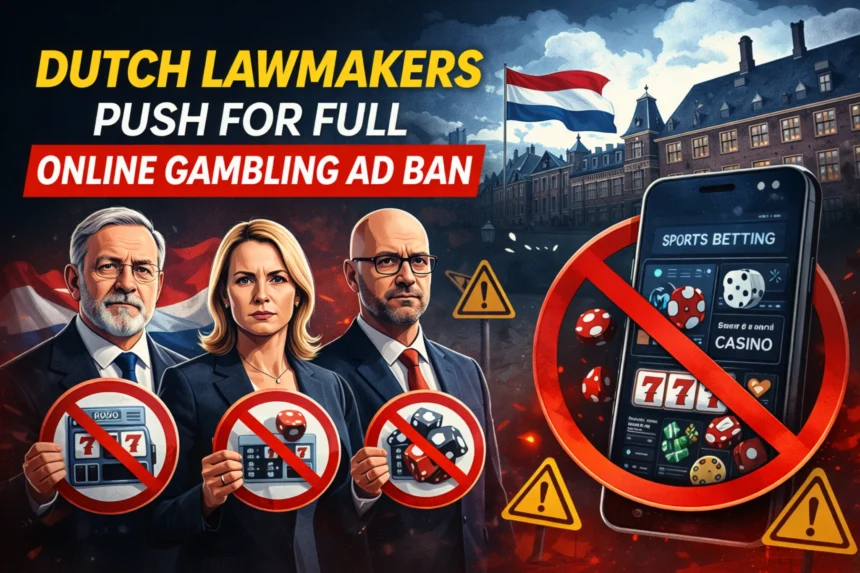
The Netherlands is heading into a sharper fight over gambling advertising, with opposition lawmakers now pushing for a complete ban on online gambling ads. The proposal matters because it goes well beyond another small marketing restriction. It would mark a much harder turn in a market that was originally built around channeling players into the legal system, not silencing licensed operators altogether.
The political argument behind the proposal is straightforward and severe. Lawmakers backing the ban say the Dutch online gambling reform has brought a large wave of new bettors into the market and worsened concerns around gambling harm, especially among younger adults. According to the reported figures cited in the debate, around 450,000 new gamblers have entered the market since reform, while young adults account for about 22% of all current online gambling accounts.
Critics of the current system are no longer arguing that the rules need a tune-up. They are arguing that the advertising model itself is part of the problem.
A Full Ban Would Be a Much Bigger Step Than Earlier Dutch Restrictions
This is important because the Netherlands has already been tightening gambling promotion. The current push is not emerging in an untouched market. It comes after the country already moved against high-visibility gambling sponsorships and broader consumer-facing promotion, and after the coalition government earlier this year also signaled support for a full ban on online gambling advertising as part of a tougher reform agenda.
What makes the new proposal stand out is its scope. A blanket online-ad ban would cut much deeper into how licensed operators compete for customers, especially in digital channels where acquisition, brand visibility, and product promotion are all tightly linked. In a regulated online market, that is not a small policy adjustment. It is a structural rewrite of how legal operators are allowed to find players.

The proposal is also tied to a wider responsible-gambling push. Alongside the advertising ban, lawmakers have called for changes to the national self-exclusion register Cruks, including extending the minimum self-exclusion period from six months to 12 months. That reinforces the public-health framing of the campaign rather than treating it as a narrow media-policy dispute.
The Dutch Debate Is Now About Whether Advertising Helps the Legal Market or Hurts It
The deeper policy split is becoming clearer. Supporters of a full ad ban argue that legalisation has normalized online gambling too aggressively and made betting far more visible and accessible than intended. Opponents, including voices around the Dutch regulator and industry groups, have warned that a blanket ban could backfire by making it harder for licensed operators to distinguish themselves from the illegal market, especially online where unlicensed advertisers are already active.
That is why this story matters beyond the Netherlands. Across Europe, advertising has become one of the main battlegrounds in gambling policy because it is faster and politically easier to restrict than licensing systems or tax structures. The Dutch case now looks like one of the clearest examples of that trend: a market opened in the name of regulation and channelization is now facing serious pressure to shut down much of its visible promotion.
The bottom line is that Dutch politicians pushing for a full online gambling ad ban are no longer debating the margins of reform. They are questioning whether the current market model has produced too much exposure, too many new players, and too much harm. Whether the proposal succeeds or not, the direction of travel is clear enough: in the Netherlands, the political appetite for gambling advertising is shrinking fast.