


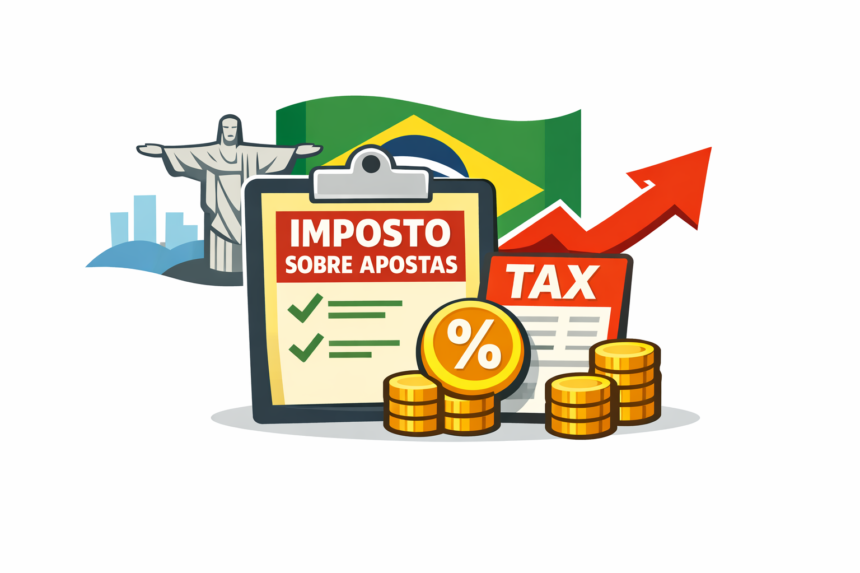
Brazil’s newly regulated gambling market avoided a potentially costly tax this week after lawmakers removed the proposed “CIDE-Bets” levy, a 15% charge on betting deposits that had raised significant concern across the industry.
The measure had been included in a broader anti-organized-crime bill moving through Brazil’s Congress. But before the legislation advanced for final approval, the Chamber of Deputies of Brazil stripped the controversial tax from the final text.
For operators preparing to enter the regulated market in Brazil, the decision was widely seen as a relief and an important signal about the government’s approach to gambling regulation.
A Tax That Alarmed the Industry
The proposed CIDE-Bets tax would have applied a 15% levy on betting deposits, meaning players could have been taxed simply for transferring funds into betting accounts.
Industry analysts warned that such a structure would have fundamentally altered the economics of Brazil’s emerging regulated market.
Unlike traditional gambling taxes, which typically apply to operator revenue, the proposed charge would have directly affected player transactions. Critics argued that this approach could discourage legal betting activity and push players toward offshore platforms that operate outside Brazil’s tax system.

In a market that has only recently moved into regulation, the stakes were high.
Brazil’s Regulated Market Still Taking Shape
Brazil is in the early stages of building its regulated online sports betting and gambling framework following legislation passed in recent years.
The country’s new system is overseen by the Secretariat of Prizes and Betting, a unit within the Ministry of Finance responsible for licensing operators and setting market rules.
Given Brazil’s population of more than 200 million people and strong sports culture, particularly around football, analysts widely view the country as one of the largest potential gambling markets in the world.
That scale is exactly why industry stakeholders reacted strongly to the proposed deposit tax.
Operators already face significant regulatory costs to enter the Brazilian market, including licensing fees and taxation on gross gaming revenue. Adding a deposit-based levy risked making the regulated market less competitive compared with offshore alternatives.
Lawmakers Remove the Levy
As debate around the anti-organized-crime bill progressed, lawmakers ultimately decided to remove the CIDE-Bets provision before sending the legislation forward.
According to congressional reports, the 15% betting-transfer tax was deleted from the final version of the bill, allowing the legislation to advance without introducing a new financial burden on betting transactions.
The move was welcomed by many industry observers, who argued that the proposed tax could have complicated the rollout of Brazil’s newly regulated market.
For regulators, the challenge remains balancing two goals: generating tax revenue from the rapidly growing betting industry while ensuring that licensed operators remain competitive against the black market.
A Critical Moment for Brazil’s Betting Industry
The debate highlights the delicate stage Brazil’s gambling market currently occupies.
On one hand, the country is building a regulated system intended to bring betting activity into a controlled legal environment. On the other, policymakers are still determining how heavily the sector should be taxed and regulated.
Major international betting brands are already preparing to operate in Brazil under the new licensing regime, making the country one of the most closely watched gambling markets globally.
Decisions like the removal of CIDE-Bets will likely shape how attractive that market becomes.
Conclusion
For now, Brazil’s betting industry has avoided a major new tax that could have altered the economics of the market.
By removing the proposed deposit levy, lawmakers appear to be signaling caution about overburdening a sector that is still in the process of becoming fully regulated.
In practical terms, that means Brazil’s gambling market can continue developing under its current framework, without a 15% tax on the very first step of betting: putting money into the account.