


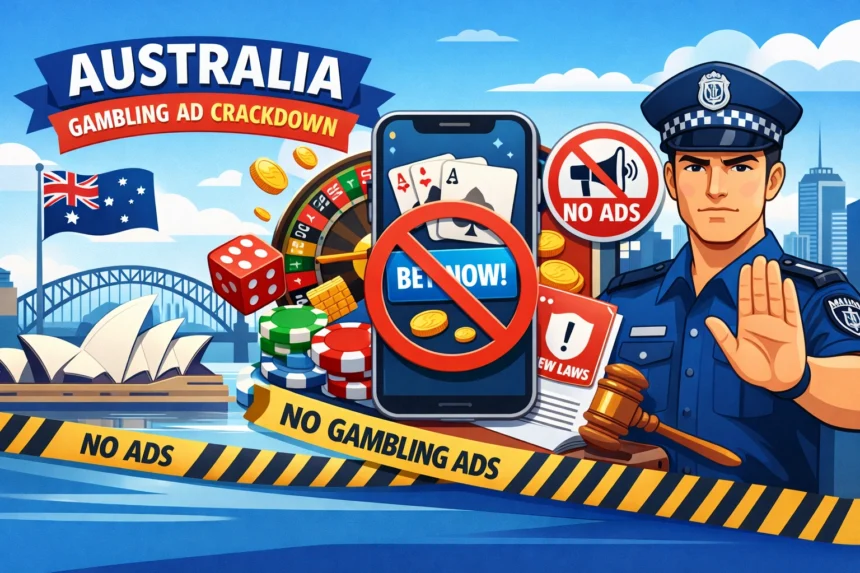
Australia has unveiled a sweeping gambling advertising crackdown that could reshape how betting brands market themselves across the country. The new rules, announced by the Albanese government, are set to begin in 2027 and target several major channels at once, including TV gambling ads, radio gambling ads, sports sponsorship, and online betting advertising.
The package is a big deal because it does not just hit one part of the market. It hits operators, broadcasters, affiliates, and sports bodies all at the same time. Under the plan, gambling ads on broadcast television will be capped at three per hour between 6am and 8:30pm, with a full ban during live sports broadcasts within those hours. Gambling ads will also be banned on radio during school drop-off and pick-up periods, removed from sports uniforms and sports venues, and limited online to users who are logged in, verified as over 18, and able to opt out.
Why this is such a major policy move
This is probably the clearest mainstream gambling policy shift of the week because it reaches into the commercial core of the industry. Australian betting operators now face tighter limits on how often they can advertise, when they can advertise, and where their branding can appear. At the same time, broadcasters stand to lose a meaningful slice of ad inventory, while sports teams and leagues may have to rethink parts of their sponsorship model. Reuters noted that gambling advertising has been a major source of revenue for free-to-air television and sport in Australia.
That is why this story matters beyond public health language and political headlines. It is also about money, media rights, and the economics of sport. If gambling branding is pushed off jerseys, out of venues, and out of big parts of the broadcast day, the effect will be felt far beyond bookmakers alone. This conclusion about broad economic impact is an inference based on the ad restrictions and reported dependence of broadcasters and sport on gambling revenue.
Online gambling ads are also being squeezed
One of the most important parts of the reform is the change to online gambling advertising. The government says these ads will only be allowed for users who are over 18, logged into an account, and able to opt out. That makes digital acquisition much harder than before, especially for brands that rely heavily on broad online targeting. The package also includes action against illegal offshore gambling sites and certain online products described by the government as highly harmful.
For affiliates and digital marketers, this could be one of the biggest changes in practice. When marketing shifts from open reach to age-gated, account-based access, the funnel gets narrower very quickly. That makes this a serious iGaming marketing story as well as a mainstream policy one. This point about affiliate and acquisition pressure is an inference drawn from the announced logged-in 18+ restriction.

The debate is not over
The government has described the package as the most significant gambling reform Australia has implemented, but critics say it still falls short of a full ban that had been recommended earlier by a parliamentary inquiry. At the same time, industry groups and broadcasters have warned about the financial hit and criticised the lack of consultation. So while the reform is clearly substantial, it is also landing in a political environment where both reform advocates and commercial stakeholders think it should have gone in a different direction.
Bottom line:
Australia’s new gambling ad crackdown is a major market-moving reform. With tighter rules on TV, radio, sports sponsorship, and online betting ads starting in 2027, it puts pressure on operators, media groups, affiliates, and sporting bodies all at once, making it one of the clearest and most important gambling policy stories in the market right now.