


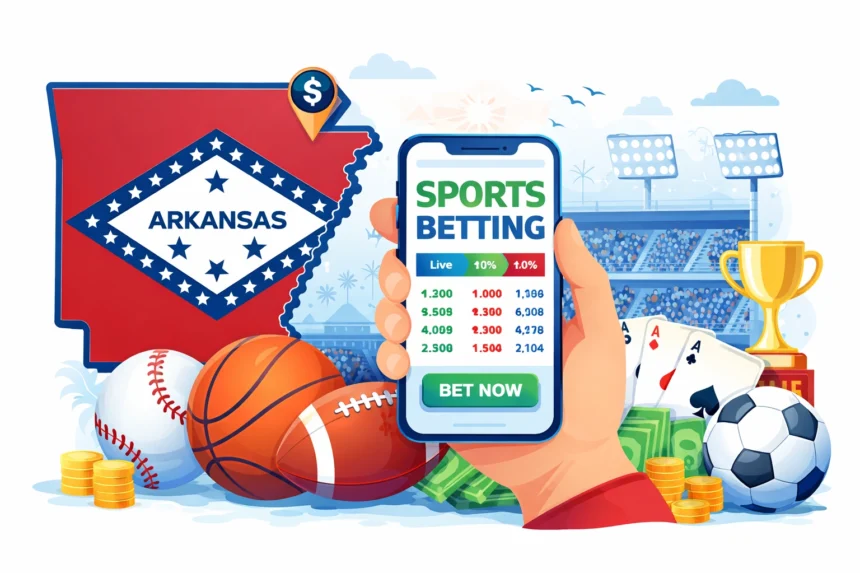
DraftKings and FanDuel have both launched online sports betting in Arkansas through partnerships with in-state casinos, after receiving the necessary vendor approvals from regulators. The rollout is a notable U.S. gambling story because it shows how market growth is still moving through casino-led distribution models, not just through standalone sportsbook expansion.
What makes Arkansas sports betting especially interesting is the structure behind it. Under state rules, when casinos work with third-party sportsbook providers, the casino must keep 51% of sportsbook revenue from the partnership. That is a tougher commercial model than in many other states, where operators often negotiate more flexible market-access terms.
A casino-first route to sportsbook growth
The Arkansas launch matters because it is not a simple case of national sportsbook brands entering a state on their own terms. Instead, FanDuel is operating through Oaklawn, while DraftKings is tied to Southland. That setup reinforces the role of local casino partners as the gatekeepers for market access.
That is an important point for the wider U.S. online betting market. Even with big national brands involved, expansion can still depend heavily on regional casino relationships, local regulation, and revenue-sharing rules that give land-based operators a strong position in the deal.
Why the 51% rule stands out
The 51% revenue rule has attracted attention for years because it materially changes the economics for third-party sportsbook brands. Arkansas requires the in-state casino to retain the majority of revenue in these partnerships, which compresses margins for the outside operator and makes the market less attractive than states with looser terms.
That is why this launch is more meaningful than it might first appear. If brands like DraftKings and FanDuel are willing to enter even under those conditions, it suggests there is still strategic value in establishing a presence, even in states where the commercial model is not especially generous.

Another sign of how U.S. gambling is growing
This is also a useful reminder that sports betting growth in the U.S. is not happening in one fixed pattern. In some states, operators scale quickly with broad mobile access and cleaner economics. In others, like Arkansas, the path runs through casino partnerships, tighter rules, and a more controlled rollout.
That makes Arkansas a good example of how regulated gambling expansion can still move forward even when the model is more restrictive. The brands are national, but the distribution remains local and casino-centered.
Bottom line:
The arrival of DraftKings and FanDuel in Arkansas online sports betting is more than just another launch story. It is another clear example of U.S. gambling growth being driven through casino partnerships and state-specific revenue structures, rather than through pure standalone sportsbook expansion.