


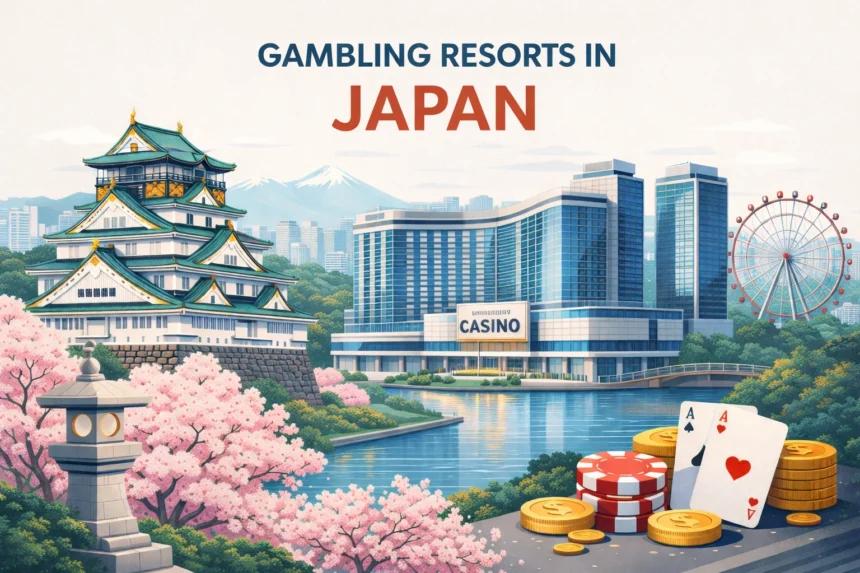
Japan has taken a meaningful step in its long-running casino-resort process by setting a May 6 to November 5, 2027 window for the next round of integrated resort applications. That matters because Japan’s law still allows for up to three casino-integrated resorts nationwide, and so far only Osaka has secured formal approval.
In practical terms, this is Japan telling the market that the process is still alive. For years, the country’s integrated-resort policy has produced more speculation than actual licences. Now there is a fresh timetable, and with only one approved project in the books, the second round is not just administrative housekeeping. It is the mechanism that could decide whether Japan ends up with a true multi-resort casino market or a very expensive one-city experiment.
Why the 2027 Window Matters for Japan’s Casino Market
The significance of the new application period is simple enough: there is still room for two more licences under Japan’s integrated-resort framework. Osaka was the sole successful project from the first application round, while other candidate locations either dropped out, failed to apply, or, in the case of Nagasaki, were not approved.
That leaves Japan in an unusual position. It spent years designing one of the world’s most closely watched casino liberalisation frameworks, yet it has only one confirmed integrated resort moving forward. Osaka’s MGM-led project is expected to open around 2030, but beyond that, the national pipeline still looks thin enough to leave plenty of unanswered questions about investor appetite, local political will, and whether Japan can still deliver on the scale once imagined for its casino industry.
The new 2027 window keeps that possibility alive. It gives interested prefectures and cities a formal path back into the process and gives international operators another shot at one of Asia’s most coveted long-term gambling opportunities. In other words, Japan is not reopening the casino dream at full volume, but it is definitely not burying it either.

A Slow-Burning Market With Room Still to Grow
What makes this story important is not just the dates. It is what those dates represent. Japan remains one of the few major Asian economies with legal room for large-scale casino-integrated resorts, and that alone keeps it strategically important for global gaming companies. The issue has never been whether the market looks attractive on paper. It has been whether the political and regulatory process can move fast enough to turn that paper value into actual projects.
Some prefectures are already being linked to the second round, with Aichi and Hokkaido among the names most often discussed as potential contenders. At the same time, other locations such as Wakayama and Fukuoka appear less likely to join the race, which suggests Japan’s next round may still be selective rather than crowded.
That is why the policy development matters. It does not guarantee a flood of bids. It does, however, create a real timetable for the next phase of the market and gives operators, investors, and local governments something more useful than rumor: an actual window in which decisions will have to be made.
The bottom line is that Japan’s new May to November 2027 application period is a genuine policy-development story, not just another recycled casino fantasy. With only Osaka approved so far and space still available for two more integrated resorts, the next round could shape whether Japan becomes a broader casino-resort market or remains a one-project case study in slow-motion liberalisation. For the industry, that makes this a date worth circling.